Can a company be too big to change?
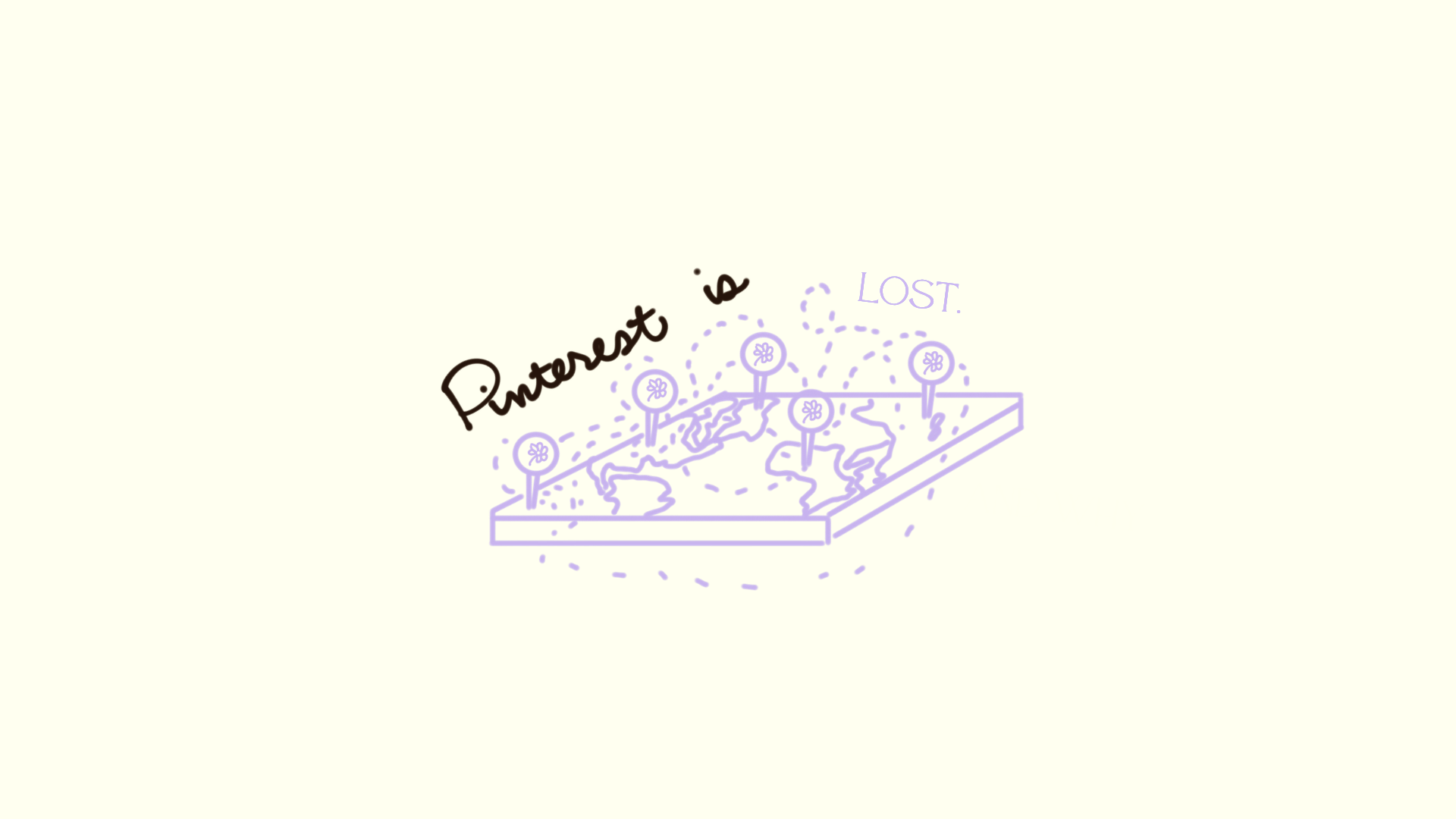
Pinterest is Lost graphic - designed by R. Henry
I've been a user of Pinterest for over 12 years. For the past 3 years, I've been doing research, creating a case study of sorts on Pinterest out of loyalty and frustration: loyalty because Pinterest felt like it was built for me; frustration because it has yet to reach the potential I know it could.
For the longest time, my sister and I were upset because there were no "subfolders." We felt it only logical that you would be able to make sections on a board, but the feature did not come until fall of 2017. We had been talking about it for years. Over the course of my usership, this became the pattern. We recognize a feature it needs, and nothing much changes. A feature comes we don't need, and life goes on.
The platform added add image search, but it never yielded anything more than the same image many times. Then there were idea pins, but Pinterest changed them before we understood their purpose. Then my feed stopped showing who I followed and replaced it with what I searched and looked at from my or others' boards. Anytime I looked at a pin, my feed was overtaken by that specific thing more times than I cared to see. Still, I made the most of it. I became very particular about curating my feed, which meant, I could not actually use the platform.
The option to shop came, which was never a reason I used Pinterest. On the rare occasion I clicked on a link for buying, the site it led to was concerning. Then came the Ad takeover. The meticulous curation of my feed was now pointless.
I tried to be a creator, hoping that somehow sharing pins like what used to inspire me would make a difference. I was never clear what the point or benefit was, and the growth that was said would happen over time never seemed to. No one ever saw my pins.
Where Pinterest was once a peaceful and beautiful escape from the stress of other social media platforms, it slowly and devastatingly became like everyone else. It became easier not to pin, search, or even open the app or webpage. It was no longer an escape for inspiration but another place where I was/am bombarded by things for which I did not ask.
So, I started to look into the data. I started reading Pinterest's reports - earnings, investor presentations, balance sheets. I watched videos of Pinterest executives talking about the platform. I searched Pinterest time and time again to see how it was described on LinkedIn, Facebook, search engines, YouTube, Instagram, etc. etc. I scoured the web for what users thought, took screenshots. I looked up stats and data in Pinterest's reporting and other sites on usership demographics and experiences. I looked at its ranking in comparison to competitors.
Pinterest had lost its way, and I needed to find the proof. I watched videos from when the company was first founded, where Ben Silbermann talked about why he started, its purpose and intents, how he got the first users and talked to people directly to get their thoughts. 3 years of this on and off, including this year.
After 12+ years of using the platform, I finally learned the tag line. I finally learned its core values and other important things that as a user I would like to know. But I only found out these things because I looked at information that Pinterest wanted its advertisers, investors, and creators to see. I know a business has to make money and the aforementioned is how they do, but where was the value put on all my years of allegiance as a user? What has my time and usage been worth? What have my needs and reason for sticking with the platform been worth? Why wasn't or doesn't Pinterest market to me like I have money to give them?
When I supported the small business innovation research (SBIR/STTR) program, we taught technologists and entrepreneurs how to sell to the government. The coaches' main purpose was to teach the students how to sell what they had developed as what their customer wanted. If they had to change the way they spoke and articulated their value to fit the frame of the government mindset and operating system, so be it. If they even had to change the technology to suit the needs of the government user specifically, so be it.
When I was selling pickles and Capri Suns to classmates in 7th or 8th grade and lost customers because I started selling those dry Nutri Grain bars nobody wanted, I learned one of the most important business lessons: know your customer; listen to your customer.
When I studied entrepreneurship in college, we were taught that customer discovery is the key to creating a good product. We had to talk to at least 100 customers before making anything. We could not ask if what we were building was a good idea or if they'd buy it. We had to ask open ended questions that told us about the customers' problems. Therein is where we learned if our solution was relevant to our target market. If it wasn't, we learned to pivot.
When I was selling baked goods at the farmer's market and a customer told me my prices were too high for that area, I listened. When a customer told me that my goods needed to be more consistent and taste the same all the time, I listened. When I looked at the sales and saw what was popular, I kept making it or made more; not because I would eat it but because my customers did.
When working with Executive Directors and Director clients, it has been my literal and contractual obligation to give them what they asked for. I had to understand their priorities, strategic goals, and style enough to diagnose organizational problems, recommend and implement solutions, and create the processes that improved on them.
Where are the people at Pinterest whose job it is to do that? Where is the team tasked to search out longtime and new users for how to improve the platform? Where are the people asking how we use the platform to validate or invalidate their assumptions for new features?
The moment I started to read Pinterest's 2026 Q2 earnings conference call transcript, I gained firsthand confirmation of everything that I'd known and complained about for the last 3 years or longer. Pinterest has been using what users search and save to train AI to give us more AI curated content. The AI is helping advertisers show us more Ads to try to sell users more. I was discouraged by what it proved: Pinterest is too far gone and too big to change. I thought surely nothing I have to say will make any modicum of a difference. Their infrastructure is completely tangled up in AI and advertising money. There is no way Pinterest would even blink at thoughts of change now.
Then I read the comments on another Pinterest post and was emboldened by the truth. My findings were no less accurate because I did not feel that the platform would change if I shared them. Whether my thoughts influence a change or not, they are still worth sharing.
The reality is if Pinterest is too big to change, then it is bound to fail. I do not hope for the platform to fail, but should it, it will be because of the "corporate cocoon," where the board room makes decisions alone without any pipeline to customer feedback. The very people needed for the platform to exist will be the very ones whose departure commences its downfall.
Change management and organizational development exist for a reason, but are such initiatives prioritized when a corporation is trying to avoid risk? Is the fear that they have too much to lose? Or is it complacency and the entitlement that no one is going to call them out?
From all appearances and from its reporting, Pinterest is a very risk averse organization. As of the Pinterest's 2026 Annual Meeting & Proxy Statement, the platform has over 600 million active users monthly. Pinterest boasts one of its core values as "Put pinners first." The earnings conference call transcript states that one of its strategic priorities as "keeping AI at the core of everything we do, from powering the user experience to our ads platform and our internal operations."
But AI is the very thing that users have problems with. Read any comments from Pinterest's posts on Instagram or YouTube; read the reviews for Pinterest in the Google Play Store. I even hear there are Reddit feeds about Pinterest's problems: AI, Ads, scamming, unprovoked and unwarranted account closure, no human engagement when contacting the platform, followers not seeing a creator's pins, and the inability to comment on a person's own pin. All of these are the issues I've seen users cite, along with the app being "unusable" because of the Ads. (There is approximately 1 to 3 ads for every pin on Pinterest now.)
Is losing any portion of its users not enough of a risk to listen and make some changes?
I have stayed with Pinterest for so long because of brand loyalty and hope. I've hoped that maybe something I say could be the catalyst for a much needed turnaround. Yet, the more deep I search, the more hope fades. Users are forced to choose between brand loyalty and actual experience satisfaction. Eventually, one will outweigh the other. It begs the question again, is Pinterest too big to change but more importantly, does it care to?